
Introduction
Recruitment in 2026 is becoming increasingly focused on how companies identify, assess, and attract talent fairly. Diversity, equity, and inclusion in recruitment 2026 is not simply about increasing the number of people from different backgrounds who apply for jobs. It is also about examining whether the recruitment process gives qualified candidates a fair opportunity to demonstrate what they can contribute.
Recruiters now have more technology available than ever before. Applicant tracking systems, automated screening, online assessments, and artificial intelligence can help companies process large numbers of applications. However, technology does not automatically make recruitment fair. If poorly designed criteria or biased assumptions are built into a process, technology can potentially reproduce or amplify those problems.
The U.S. Equal Employment Opportunity Commission, for example, advises employers to use objective, job-related qualification standards and apply selection criteria consistently. Its current enforcement priorities also specifically identify potential discrimination involving AI and other technology used in recruitment and hiring.
This makes inclusive recruitment an important consideration for employers, HR professionals, and hiring managers entering 2026.
What Does Inclusive Recruitment Mean?
Inclusive recruitment means designing hiring processes that allow qualified people from different backgrounds to compete fairly for employment opportunities.
This can involve reviewing:
- Where jobs are advertised
- How job descriptions are written
- Which qualifications are genuinely necessary
- How applications are screened
- How interviews are conducted
- Whether applicants can request reasonable accommodations
- How recruitment technology is used
- How final hiring decisions are documented

Importantly, inclusive recruitment does not mean abandoning qualifications or hiring people solely because they belong to a particular demographic group.
Instead, employers can focus on whether their requirements are genuinely connected to the work and whether unnecessary barriers are preventing qualified candidates from entering the process.
The EEOC recommends analyzing the actual duties and competencies associated with a position before creating qualification standards.
1. Write More Inclusive Job Descriptions
The job advertisement is often the first interaction between an organization and a potential candidate.
A poorly written advertisement can discourage qualified people before they even submit an application.
One useful practice is to separate essential requirements from preferred qualifications.
For example, if a position genuinely requires proficiency in Excel, that may be an essential technical skill. However, requiring five years of experience with a particular software package may unnecessarily eliminate capable candidates if the software can be learned relatively quickly.
Employers should ask:
Does this requirement actually predict success in the job?
If the answer is no, it may be worth reconsidering.
Job descriptions should also clearly explain:
- The main responsibilities
- Essential qualifications
- Preferred qualifications
- Working arrangements
- Expected working hours
- Application requirements
- Salary or compensation information where appropriate
- Accessibility or accommodation information where applicable
Avoid unnecessarily complicated language that makes an advertisement difficult to understand.
A clear job description helps candidates determine whether the opportunity genuinely matches their skills.
2. Expand Where You Find Candidates
Recruitment can become less diverse when companies repeatedly search for candidates in the same places.
For example, relying entirely on employee referrals may repeatedly draw candidates from the same professional and social networks.

Expanding recruitment channels can help employers reach different sections of the qualified labor market.
Depending on the position, employers can consider:
- Professional associations
- Universities and colleges
- Skills-training organizations
- Disability-focused employment organizations
- Community organizations
- Industry networks
- Online professional platforms
- Career fairs
- Apprenticeship and internship programs
The objective should not be to lower standards. It is to make sure qualified candidates have reasonable opportunities to discover the position.
The EEOC similarly recommends widening recruitment sources and working with organizations that can help employers reach broader pools of qualified candidates.
3. Use Skills-Based Recruitment Where Appropriate
Traditional recruitment can sometimes place excessive emphasis on educational credentials, previous job titles, or the reputation of an applicant’s employer.
Skills-based recruitment takes a different approach.
It asks:
Can this person demonstrate the abilities required to perform the job?
For some positions, a candidate’s practical ability may be more informative than whether they have followed a particular educational or career path.
For example, a digital marketing position might require:
- Data analysis
- Copywriting
- Campaign management
- Search engine optimization
- Social media knowledge
- Communication
Instead of relying exclusively on degrees or job titles, employers can use structured assessments to evaluate relevant capabilities.
This can also benefit career changers and candidates whose previous experience does not fit traditional recruitment patterns.
However, assessments should themselves be reviewed for fairness. A test that unnecessarily excludes certain groups may create another barrier.
The EEOC advises employers to ensure that selection criteria are job-related and consistently applied.
4. Make Screening Criteria Consistent
Consistency is one of the most important principles in fair recruitment.
If two candidates are applying for the same position, recruiters should not arbitrarily apply different standards to them.
For example, if five years of experience is genuinely required, recruiters should have a clear reason for that requirement and apply it consistently.
Similarly, interviewers should know beforehand which competencies they are assessing.
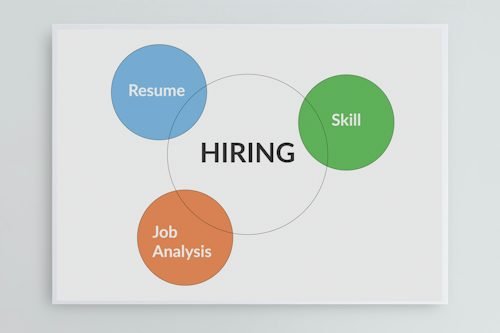
A structured screening process might involve:
- Identifying essential qualifications.
- Creating objective screening criteria.
- Applying those criteria consistently.
- Recording reasons for advancing or rejecting candidates.
- Reviewing unusual patterns.
- Using the same core assessment framework for candidates competing for the same position.
This can reduce the influence of personal preferences and “gut feelings.”
The EEOC specifically recommends neutral and objective criteria and warns against subjective employment decisions based on stereotypes or hidden biases.
5. Structure the Interview Process
Unstructured interviews can produce inconsistent results because different candidates may be asked completely different questions.
A structured interview gives candidates a more comparable opportunity to demonstrate their abilities.
Recruiters can prepare a core set of questions connected to the position’s requirements.
For example:
Instead of:
“Tell me something interesting about yourself.”
Consider:
“Describe a time when you had to solve an unexpected problem at work. What did you do, and what was the result?”
The second question focuses more directly on a job-related competency.
Interviewers can also use a scoring framework that defines what constitutes a strong, acceptable, or weak response.
This does not eliminate human judgment, but it can make the process more consistent and easier to review.
6. Consider Accessibility From the Beginning
An inclusive recruitment process should consider whether candidates with disabilities can participate effectively.
Accessibility may involve the application system, online assessments, interviews, physical interview locations, or communication methods.
For example, a candidate may require an alternative assessment format or another reasonable accommodation.
This is particularly important as employers increasingly use AI-powered assessments and automated recruitment tools. The EEOC has noted that algorithmic tools can potentially screen out people with disabilities and that reasonable accommodations may be necessary in appropriate circumstances.
Employers should therefore avoid assuming that one recruitment format works equally well for everyone.
The goal is to assess whether candidates can perform the essential functions of the position, rather than accidentally testing an unrelated limitation.
The Role of DEI in Modern Recruitment
Diversity, equity, and inclusion should not be treated as a single recruitment campaign.
They are better understood as principles that can influence the entire candidate journey.
That means examining the process from the moment a candidate sees a job advertisement through application, screening, interviewing, selection, and onboarding.
The World Economic Forum’s 2026 inclusion research highlights organizations that are developing measurable and scalable approaches to economic inclusion, demonstrating that inclusion is increasingly being considered alongside broader organizational and workforce practices.
For employers, the practical question is therefore not simply
“How diverse is our applicant pool?”
It is also
“Are we creating a recruitment process in which qualified candidates have a fair opportunity to succeed?”
That question provides a useful foundation for building more transparent and consistent recruitment practices in 2026.
7. Use AI Recruitment Tools Carefully
Artificial intelligence is becoming increasingly common throughout recruitment. Employers can use AI and automated systems to advertise vacancies, screen resumes, schedule interviews, assess candidates, and manage large applicant pools.
However, using AI does not automatically make recruitment more objective.
An algorithm can reflect problems contained within its training data, design, or selection criteria. The U.S. Equal Employment Opportunity Commission has specifically identified the use of AI and other technology in recruitment and hiring as an area where discriminatory effects can occur.

For employers, this means AI should be treated as a tool rather than an unquestionable decision-maker.
Before introducing an automated recruitment system, organizations should ask:
- What information does the system evaluate?
- Is that information genuinely relevant to the job?
- How does the system rank or eliminate candidates?
- Can candidates request an accommodation?
- Is there human oversight?
- Can the employer monitor whether certain groups are disproportionately screened out?
The objective should be to combine technological efficiency with appropriate human judgment.
8. Audit Recruitment Technology
Simply purchasing an AI recruitment platform is not the end of the process.
Organizations should periodically review whether the technology is producing unexpected patterns.
For example, if an automated assessment consistently eliminates candidates with certain characteristics, the employer should investigate why.
This does not automatically prove discrimination. There may be legitimate explanations. However, unexplained differences deserve attention, particularly where the screening criterion is not clearly connected to successful job performance.
The EEOC has warned that seemingly neutral employment practices can have disproportionately negative effects on particular groups and that selection procedures should be job-related and appropriately justified.

Organizations can therefore establish regular checks for:
- Candidate progression rates
- Assessment completion rates
- Interview selection rates
- Offer rates
- Candidate withdrawal rates
- Accessibility problems
- Unexpected differences between applicant groups
Where legally appropriate, aggregated recruitment data can help HR teams identify patterns without using protected characteristics as a hiring criterion.
9. Train Recruiters and Hiring Managers
Even a carefully designed recruitment system can be undermined by inconsistent human decision-making.
Recruiters and hiring managers should understand the organization’s recruitment standards and applicable employment laws.
Training can cover:
- Structured interviewing
- Objective candidate assessment
- Appropriate interview questions
- Unconscious bias awareness
- Accessibility
- Appropriate use of AI
- Documentation of decisions
- Consistent application of selection criteria

The EEOC recommends ensuring that employees involved in recruitment and hiring understand their responsibilities and that hiring decisions are not based on protected characteristics.
Training should not be treated as a once-a-year presentation. Recruitment practices, technologies, and legal requirements can change, so organizations should review training periodically.
10. Give Candidates a Consistent Experience
Candidate experience is another important part of inclusive recruitment.
Imagine two applicants applying for the same position. One receives clear instructions, accessible technology, and several days to complete an assessment. The other encounters an inaccessible application system and receives unclear instructions.
Even if the organization uses the same recruitment platform, the experience may not be equivalent.

Recruiters should therefore make application instructions clear and provide an appropriate method for candidates to request assistance or accommodations where applicable.
This becomes especially important when recruitment processes involve automated assessments, recorded interviews, or AI-powered tools.
The EEOC notes that algorithmic and AI tools can potentially screen out applicants with disabilities and that employers may need to provide reasonable accommodations in appropriate circumstances.
11. Avoid Unnecessary Requirements
One of the simplest ways to make recruitment more accessible is to remove requirements that are not genuinely necessary.
For example, a company might require:
“Five years of experience.”
But perhaps the actual job requires someone who can demonstrate specific technical abilities that could be acquired in fewer years.
Similarly, an employer might require a particular degree when the essential duties can be demonstrated through equivalent experience or skills.
This does not mean removing legitimate requirements. If a qualification is legally or professionally necessary for the position, it should remain.
The important question is
Is this requirement genuinely connected to the job?
The EEOC advises that employment tests and selection requirements should be necessary and related to the work, rather than unnecessarily excluding particular groups.
12. Measure Recruitment Outcomes
DEI recruitment should be measurable where appropriate.
Organizations cannot easily determine whether their process is working if they never examine what happens to candidates at different stages.
A recruitment dashboard might track:
- Number of applicants
- Applicants reaching screening
- Applicants reaching interviews
- Interview-to-offer ratios
- Offer acceptance rates
- Candidate withdrawal rates
- Time to hire
- Source of applicants
- Accessibility requests and resolution
- Retention after hiring

The purpose of measurement should be to identify potential barriers and improve the recruitment process—not to reduce candidates to demographic statistics.
Where demographic or other sensitive information is collected for lawful monitoring purposes, organizations should handle it carefully, limit access, and follow applicable privacy and employment laws.
13. Build Inclusion Into Employer Branding
Candidates increasingly encounter an organization’s reputation before applying.
A company can therefore communicate its workplace culture through:
- Its careers website
- Job advertisements
- Employee stories
- Recruitment videos
- Social media
- Career events
- Application communications
However, employers should ensure that public claims about diversity and inclusion accurately reflect their practices.
Overpromising can damage trust if candidates discover that the actual recruitment experience does not match the company’s messaging.
A better approach is to communicate specific practices.
For example, instead of simply saying:
“We value diversity.”
An organization could explain how it structures interviews, supports accessibility, evaluates candidates, or provides development opportunities.
Specific information gives candidates a clearer understanding of the organization.
Common DEI Recruitment Mistakes to Avoid
Even organizations with good intentions can create problems through poorly designed recruitment processes.
Mistake 1: Treating DEI as a Numbers Exercise
Hiring statistics can provide useful information, but numbers alone do not explain why candidates are progressing or leaving the recruitment process.
Organizations should investigate the process behind the numbers.
Mistake 2: Assuming AI Is Neutral
AI can process information consistently, but consistency is not the same thing as fairness.
If the criteria are flawed, automation can simply apply those criteria faster.
Mistake 3: Using Vague Interview Questions
Questions based on personality or “culture fit” can be difficult to assess consistently.
Job-related competencies generally provide a clearer basis for comparison.
Mistake 4: Having Excessive Requirements
Unnecessary degrees, years of experience, location requirements, or certifications can shrink the qualified candidate pool.
Every requirement should have a reason.
Mistake 5: Ignoring Accessibility
An inaccessible online application can prevent qualified candidates from entering the recruitment process in the first place.
Mistake 6: Failing to Review Recruitment Data
If an organization never examines candidate progression, it may miss barriers hidden within its recruitment system.
A Practical 2026 DEI Recruitment Checklist
Before publishing a vacancy, recruiters can ask:
Job description
- Are essential requirements clearly identified?
- Are preferred requirements separated from essential ones?
- Is the language clear?
- Are unnecessary qualifications excluded?
Candidate sourcing
- Are multiple recruitment channels being used?
- Is the organization reaching a sufficiently broad pool of qualified candidates?
- Are employee referrals being balanced with other sources?
Screening
- Are candidates assessed against job-related criteria?
- Are the same core criteria applied consistently?
- Are automated screening tools being monitored?
Interviews
- Are interview questions structured?
- Are interviewers assessing the same core competencies?
- Are scoring criteria established in advance?
Accessibility
- Can candidates access the application process?
- Is there a clear way to request an accommodation?
- Can alternative assessment arrangements be provided where appropriate?
AI
- Is AI being used for a legitimate recruitment purpose?
- Does the employer understand what the system evaluates?
- Is there appropriate human oversight?
- Is the technology periodically reviewed?
Measurement
- Does the organization track candidate progression?
- Are unexpected differences investigated?
- Are recruitment improvements based on evidence?
What Does the Future of Inclusive Recruitment Look Like?
Recruitment in 2026 is likely to involve a combination of technology and human judgment.
AI can help recruiters handle repetitive administrative work, search large candidate pools, and organize information. Humans remain responsible for defining appropriate job requirements, interpreting evidence, communicating with candidates, and making employment decisions within the applicable legal framework.

The key challenge is finding the right balance.
An organization that relies entirely on human intuition may struggle with inconsistency. An organization that relies entirely on automated systems may fail to recognize circumstances that technology cannot properly interpret.
A more thoughtful approach is to use technology to support recruitment while maintaining appropriate human oversight and accountability.
Final Thoughts
Diversity, equity, and inclusion in recruitment 2026 is ultimately about examining the entire hiring journey.
It begins with a job description and continues through candidate sourcing, screening, assessment, interviewing, selection, and onboarding.
Organizations can make meaningful improvements by focusing on job-related requirements, widening appropriate recruitment channels, using structured interviews, improving accessibility, training hiring teams, and carefully monitoring recruitment technology.
AI adds another layer to this process. It can increase efficiency, but employers should not assume that automated decisions are automatically fair. Current EEOC guidance and enforcement priorities emphasize that technology used in recruitment remains subject to applicable employment discrimination requirements.
The most practical approach for 2026 is therefore not simply to ask whether a recruitment process is automated or traditional.
Instead, employers should ask:
Does this process give qualified candidates a fair, accessible, and consistent opportunity to demonstrate their ability to perform the job?
That question can help organizations build recruitment systems that are more transparent, evidence-based, and responsive to the changing world of work.
Related posts:
 Hidden Side Hustles for 2026: Unique Ways to Earn More
 AI and Automation in 2026: Jobs That Will Grow vs. Jobs That Will Change
 Top 10 In-Demand Skills in 2026 That Will Get You Hired Fast
 Upskilling Trends in 2026: Courses, Certifications & Online Learning Platforms
 How to Make Your Resume Stand Out in 2026’s Competitive Job Market
 AI-Powered Job Matching in 2026: How to Use Technology to Land Your Dream Job