
Artificial intelligence (AI) and automation are reshaping the global workforce faster than ever before. In 2026, organizations across nearly every industry are integrating AI-powered tools to improve productivity, streamline operations, and enhance decision-making. While these technologies are changing how work gets done, they are not simply eliminating jobs—they are also creating entirely new career opportunities.
For professionals, job seekers, and students, understanding how AI is transforming the labor market is essential. The most successful workers are those who adapt by learning new skills, embracing technology, and focusing on tasks that require creativity, critical thinking, and human interaction.
In this guide, we’ll explore the industries benefiting most from AI, the careers expected to grow, the jobs that are evolving, and practical steps you can take to stay competitive in the modern workforce.

Why AI and Automation Continue to Expand
Businesses continue investing heavily in AI because it offers measurable improvements in efficiency, accuracy, and cost savings.
Key drivers include:
- Rising labor costs
- Increasing demand for productivity
- Advances in machine learning
- Better cloud computing infrastructure
- Improved data analytics
- Faster customer service solutions
- Growth in digital transformation
- Greater workplace flexibility
Rather than replacing every worker, AI is increasingly being used to automate repetitive tasks while allowing employees to focus on higher-value responsibilities.
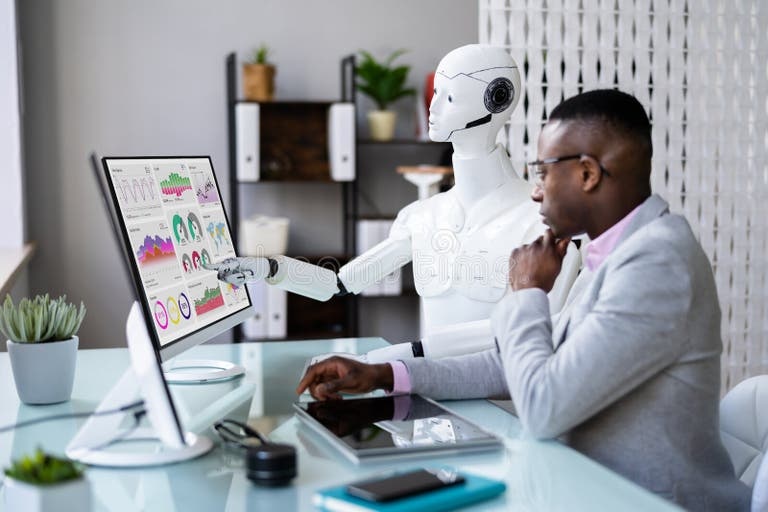
How AI Is Changing the Workplace
Modern workplaces now combine human expertise with intelligent software.
AI tools assist employees by:
- Automating repetitive tasks
- Summarizing documents
- Analyzing large datasets
- Scheduling meetings
- Answering customer questions
- Generating reports
- Supporting decision-making
- Improving workflow efficiency
This shift enables professionals to spend more time on strategy, innovation, customer relationships, and complex problem-solving.

Industries Experiencing the Greatest AI Growth
Several industries are rapidly adopting AI and automation technologies.
1. Healthcare
Healthcare organizations increasingly rely on AI to improve patient care and operational efficiency.
Growing roles include:
- Healthcare Data Analysts
- Medical AI Specialists
- Telehealth Coordinators
- Clinical Informatics Professionals
- Digital Health Consultants
While AI assists with diagnostics and administrative work, healthcare professionals remain essential for patient care and medical decision-making.

2. Financial Services
Banks, insurers, and investment firms continue expanding their use of AI.
Applications include:
- Fraud detection
- Risk analysis
- Automated customer support
- Investment research
- Credit assessment
- Financial forecasting
Demand continues growing for professionals who understand both finance and AI technologies.

3. Manufacturing
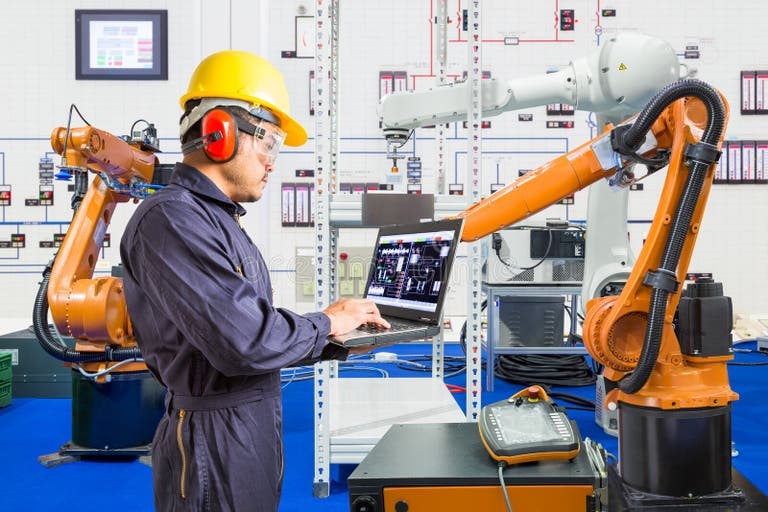
Smart factories are becoming increasingly common.
AI-powered systems help manufacturers with:
- Predictive maintenance
- Quality control
- Inventory management
- Production planning
- Supply chain optimization
Although automation reduces some manual tasks, it increases demand for technicians, engineers, and robotics specialists who maintain these advanced systems.
4. Retail and E-Commerce
Retailers are using AI to improve customer experiences and streamline operations.
Examples include:
- Personalized product recommendations
- Inventory forecasting
- Chatbots
- Dynamic pricing
- Demand prediction
- Warehouse automation
Professionals who combine retail expertise with digital skills remain highly valuable.

5. Marketing and Advertising
Marketing teams increasingly use AI to improve campaign performance.
Popular applications include:
- Content generation
- SEO optimization
- Audience segmentation
- Advertising automation
- Customer analytics
- Email personalization
Rather than replacing marketers, AI allows them to produce better results more efficiently.

Jobs Expected to Grow
Several occupations are expected to experience strong growth because they complement AI rather than compete with it.
AI Engineers
Organizations need professionals who design, build, and improve AI systems.
Responsibilities include:
- Developing machine learning models
- Training AI algorithms
- Testing AI performance
- Improving automation systems
Data Scientists
Businesses continue generating enormous amounts of data.
Data scientists help organizations:
- Analyze trends
- Predict customer behavior
- Improve business decisions
- Build predictive models
Cybersecurity Specialists
As AI systems become more widespread, protecting digital infrastructure becomes increasingly important.
Cybersecurity professionals defend organizations against:
- Cyberattacks
- Data breaches
- Identity theft
- Ransomware
- AI-powered security threats
Cloud Computing Professionals
Cloud technology supports many AI applications.
Growing roles include:
- Cloud Architects
- Cloud Engineers
- DevOps Specialists
- Infrastructure Engineers
AI Trainers
AI systems require high-quality data and human feedback.
AI trainers help:
- Evaluate AI responses
- Improve model accuracy
- Label datasets
- Identify errors
- Refine AI outputs
Demand for these specialists continues growing across multiple industries.

Human Skills Becoming More Valuable
As automation handles repetitive work, employers increasingly prioritize uniquely human capabilities.
These include:
- Creativity
- Emotional intelligence
- Leadership
- Negotiation
- Critical thinking
- Communication
- Ethical judgment
- Strategic planning
- Collaboration
- Adaptability
Professionals who combine these interpersonal strengths with technical expertise will be among the most sought-after employees in the coming years.

Jobs That Will Change Because of AI
Artificial intelligence is transforming many occupations by automating repetitive and time-consuming tasks. However, in most cases, AI is changing how people work rather than replacing them entirely.
Professionals who embrace AI as a productivity tool are often able to complete tasks faster, improve accuracy, and focus on higher-value responsibilities.
Some of the jobs experiencing significant transformation include:
- Administrative Assistants
- Customer Service Representatives
- Accountants
- Graphic Designers
- Marketing Specialists
- Human Resources Professionals
- Journalists
- Software Developers
- Legal Assistants
- Project Coordinators
Employees in these roles are increasingly expected to work alongside AI-powered software to improve efficiency and deliver better results.

Careers Becoming More Technology-Driven
Many traditional professions now require digital skills that were once considered optional.
For example:
Human Resources
HR professionals now use AI to:
- Screen resumes
- Schedule interviews
- Analyze workforce trends
- Improve recruitment strategies
Despite automation, human judgment remains essential when assessing culture fit, conducting interviews, and making hiring decisions.
Accounting
Modern accountants increasingly rely on AI for:
- Bookkeeping
- Expense categorization
- Financial reporting
- Fraud detection
- Tax preparation assistance
This allows accountants to focus more on financial strategy and business consulting.
Education
Teachers are using AI to:
- Create lesson plans
- Generate quizzes
- Personalize learning
- Track student progress
- Automate grading
Educators continue to play a critical role in mentoring, motivating, and supporting learners.

New Careers Emerging in 2026
As AI adoption accelerates, entirely new career paths are emerging.
Some of the fastest-growing roles include:
- AI Prompt Engineer
- AI Workflow Consultant
- AI Ethics Specialist
- Machine Learning Engineer
- AI Product Manager
- Automation Consultant
- Robotics Technician
- AI Compliance Officer
- Data Annotation Specialist
- AI Quality Assurance Analyst
These professions combine technical expertise with business knowledge and are expected to remain in high demand as organizations continue investing in AI technologies.
Skills You Should Learn Now
To remain competitive in an AI-driven job market, professionals should invest in both technical and transferable skills.
Technical Skills
- Artificial Intelligence fundamentals
- Prompt engineering
- Data analytics
- Microsoft Excel
- Python programming
- SQL
- Cloud computing
- Cybersecurity basics
- Project management software
- Digital marketing tools
Human Skills
- Communication
- Leadership
- Emotional intelligence
- Creativity
- Problem-solving
- Critical thinking
- Adaptability
- Collaboration
- Decision-making
- Customer relationship management
The combination of technical knowledge and interpersonal skills makes professionals more resilient in a rapidly changing workplace.
How to Future-Proof Your Career
Preparing for the future of work requires continuous learning and adaptability.
Practical steps include:
- Complete industry-recognized certifications.
- Learn how to use AI productivity tools effectively.
- Stay informed about industry trends.
- Build a strong LinkedIn profile.
- Develop a portfolio showcasing your work.
- Attend webinars and professional workshops.
- Network with industry professionals.
- Practice lifelong learning.
- Embrace change rather than resist it.
Professionals who continuously improve their skills are more likely to remain competitive regardless of technological advancements.

Common Myths About AI and Employment
Misconceptions about AI can create unnecessary fear. Here are some common myths—and the reality behind them:
Myth 1: AI Will Replace Every Job
Reality: AI is most effective at automating repetitive tasks. Many roles still require creativity, empathy, judgment, and interpersonal communication.
Myth 2: Only Technology Professionals Need AI Skills
Reality: AI tools are increasingly used in finance, healthcare, education, marketing, law, manufacturing, and customer service. Understanding AI is becoming valuable across nearly every profession.
Myth 3: AI Eliminates the Need for Human Creativity
Reality: AI can generate ideas and automate routine work, but humans remain essential for innovation, storytelling, strategic thinking, and ethical decision-making.
Myth 4: Learning AI Is Too Difficult
Reality: Many AI tools are designed for everyday users, and countless online courses make it easier than ever to build AI-related skills without an advanced technical background.

Industries Likely to Benefit Most
As AI adoption continues, several sectors are expected to experience sustained growth.
These include:
- Artificial Intelligence
- Cybersecurity
- Healthcare Technology
- Renewable Energy
- Financial Technology (FinTech)
- Cloud Computing
- Robotics
- Logistics
- Education Technology
- Digital Marketing
Professionals with expertise in these industries are likely to enjoy strong employment prospects and opportunities for career advancement.

Preparing for an AI-Powered Workplace
Success in the workplace of 2026 and beyond depends on embracing change.
Employers increasingly value individuals who:
- Learn new technologies quickly.
- Adapt to changing business needs.
- Work effectively with AI tools.
- Solve complex problems.
- Collaborate across teams.
- Demonstrate ethical decision-making.
- Continue developing their skills.
Rather than viewing AI as competition, professionals should see it as a powerful tool that can increase productivity and open new career opportunities.

Final Thoughts
Artificial intelligence and automation are redefining the future of work, but they are not simply replacing jobs—they are reshaping them. While repetitive tasks are increasingly handled by intelligent systems, demand continues to grow for professionals who combine technical expertise with creativity, critical thinking, emotional intelligence, and strong communication skills.
The careers most likely to thrive in 2026 are those that leverage AI to improve efficiency while relying on human judgment for innovation, strategy, and relationship building. New roles such as AI Prompt Engineers, AI Ethics Specialists, Automation Consultants, and Machine Learning Engineers illustrate how technological progress is creating opportunities alongside change.
To remain competitive, professionals should adopt a mindset of continuous learning, invest in relevant certifications, become comfortable using AI-powered tools, and stay informed about developments in their industries. Those who embrace technology rather than fear it will be better positioned to succeed in an evolving job market.
As AI continues to transform workplaces around the world, the greatest advantage will belong to individuals who can work with technology instead of competing against it. By developing future-ready skills and remaining adaptable, you can build a resilient and rewarding career in the AI-powered economy of 2026 and beyond.
Related posts:
 How Non-Coders Are Selling AI Automation Services in 2026
 Employment & Job Market Trends in 2026: Key Workforce Changes and Career Opportunities
 Short-Term Contracts and Gig Jobs Rising in 2026: What Every Job Seeker Should Know
 Sales Support Representative – Rockwell Automation
 Hidden Side Hustles for 2026: Unique Ways to Earn More
 Contract Work vs. Full-Time Roles in 2026: Pros and Cons and What Platforms Still Pay