
Introduction
The side-hustle economy has changed considerably since 2024.
Some opportunities that were heavily promoted during 2024 and 2025 became increasingly competitive, while others continued attracting customers because they solved genuine problems. Artificial intelligence also changed the landscape, making certain tasks easier to automate while creating new opportunities for people who can combine technology with human skills.
That makes 2026 an interesting year for anyone looking for an additional source of income.
Rather than chasing every new online money-making trend, it can be useful to examine the profitable side hustles in 2026 that have already demonstrated some staying power.
These are not guaranteed-money opportunities. Income depends on skills, demand, pricing, competition, location, and the amount of time invested. However, established categories can offer a useful starting point because customers already understand the services.
Current freelance-market data illustrates this distinction. Upwork’s 2026 research found that established skills such as virtual assistance, full-stack development, data analytics, and graphic design remained in demand even as AI capabilities expanded. (upwork.com)
The lesson is simple: a side hustle does not necessarily need to be new to remain valuable.

Why Some Side Hustles Survived
The side hustles that survived the changes of 2024 and 2025 generally have something in common: they provide a service that people or businesses continue to need.
Consider administration.
Businesses still need emails answered, calendars organized, spreadsheets updated, and customers supported.
The technology used to perform those tasks may change, but the underlying need remains.
The same principle applies to marketing, e-commerce, bookkeeping support, research, design, video production, and other services.
The most sustainable side hustles therefore tend to be connected to real customer problems rather than temporary internet hype.
1. Freelancing
Freelancing remains one of the most flexible side-hustle categories in 2026.
Instead of creating a completely new business, freelancers sell skills they already possess.
Common freelance services include:
- Writing
- Editing
- Graphic design
- Web development
- Data analysis
- Research
- Digital marketing
- Video editing
- Customer support
- Virtual assistance
The important change is that freelancers increasingly need to differentiate themselves.
AI has made some basic tasks easier to produce. As a result, simply offering generic services may not be enough.
Upwork’s 2026 Future Workforce Index found that AI-related work was growing while value was increasingly shifting toward more complex work involving domain expertise, judgment, and workflow design. (upwork.com)
A freelancer who combines a traditional skill with AI can therefore create a stronger service offering.
For example, instead of simply offering “content writing,” someone might offer content research, editing, fact-checking, and AI-assisted content optimization.

2. Virtual Assistance
Virtual assistance survived the rapid changes of recent years because businesses continue to need administrative support.
A virtual assistant can work remotely and provide services such as
- Email management
- Calendar management
- Data entry
- Customer communication
- Meeting coordination
- Online research
- Document preparation
- Spreadsheet management
- Travel planning
- CRM administration
The role is also evolving.
A virtual assistant in 2026 may use AI tools to summarize meetings, organize information, draft routine communications, or streamline repetitive processes.
That means technology does not necessarily eliminate the need for virtual assistants. Instead, it can change what clients expect from them.
A VA who understands Google Workspace, Microsoft Office, CRM systems, project-management software, and AI tools can potentially offer a broader service.
Upwork’s 2026 skills research specifically lists general virtual assistance among established skills that continued to attract demand. (upwork.com)
3. Online Tutoring and Skills Training
Education-based side hustles also survived the recent changes because people continue paying to learn useful skills.
Online tutoring can cover traditional academic subjects as well as practical skills.
Examples include:
- Mathematics
- Economics
- Accounting
- English
- Coding
- Excel
- Business skills
- Language learning
- Exam preparation
- Career skills
The advantage of tutoring is that the service can be delivered remotely and adapted to individual learners.
AI has changed education, but it has not eliminated the need for explanations, accountability, and personalized assistance.
A tutor can also use AI to create practice questions, organize lessons, or provide additional exercises while remaining responsible for the teaching process.
4. E-Commerce Support
Not everyone wants to operate an online store.
Some people can make money by helping existing sellers manage theirs.
E-commerce support can include:
- Product listing creation
- Product-description editing
- Customer service
- Inventory spreadsheets
- Order administration
- Product research
- Marketplace management
- Image preparation
- Competitor research
This is particularly useful because online sellers frequently have more operational work than they can handle alone.
Instead of competing with thousands of other sellers for customers, an aspiring side hustler can sell services to those sellers.

5. Social Media Management
Social media management remains another established side hustle.
Small businesses often understand that they need an online presence but do not have enough time to maintain it consistently.
A social media freelancer can help with:
- Content calendars
- Caption writing
- Scheduling
- Basic graphic creation
- Short-form videos
- Community management
- Analytics
- Competitor research
However, 2026 social media management is becoming more demanding.
Simply posting several times a week may not be enough.
Businesses increasingly want content that supports measurable objectives such as website traffic, enquiries, sales, brand awareness, or customer retention.
AI can help with brainstorming and production, but strategy and understanding the target audience remain important.
6. Video Editing and Content Repurposing
Video has remained a major part of digital marketing, and this has created opportunities for video editors.
A single long-form video can potentially be turned into multiple pieces of content:
- Short videos
- Social clips
- Promotional videos
- Educational clips
- Quote graphics
- Captions
- Highlight reels
This is where content repurposing becomes a useful service.
Rather than asking a client to create new content constantly, an editor can help them extract more value from material they have already produced.
However, AI is changing this market too.
Automated editing and generative video tools are making basic production easier. That means editors may need to focus increasingly on storytelling, pacing, brand consistency, audience retention, and creative decisions.
Upwork’s 2026 research similarly shows that AI-related creative work is growing rapidly, while the value of lower-complexity execution is under pressure. (upwork.com)

7. Digital Marketing Services
Digital marketing remains relevant because businesses still need customers.
A side hustler can specialize in one particular area instead of attempting to provide every marketing service.
Potential niches include:
- Email marketing
- Search engine optimization
- Social media advertising
- Local SEO
- Content marketing
- Lead generation
- Marketing analytics
- Conversion optimization
Specialization can make it easier to communicate your value.
For example, “I help local businesses improve their Google visibility” is more specific than simply saying “I do marketing.”
AI can assist with research, content creation, and data analysis, but businesses still need people who can interpret results and connect marketing activity with commercial objectives.
8. Website Services
Website-related work also remains relevant because businesses need websites maintained, updated, and improved.
You do not necessarily need to become an advanced software developer.
Possible services include:
- WordPress setup
- Website updates
- Landing pages
- Basic SEO
- Website content updates
- Speed optimization
- Product-page creation
- Website testing
- Basic maintenance
A particularly useful approach is to specialize in small businesses.
Many smaller companies need straightforward website assistance rather than complex enterprise development.
The opportunity is therefore not necessarily about competing with professional software-development agencies.
It can be about solving smaller problems that businesses do not have the resources or time to handle themselves.
9. Graphic Design
Graphic design has faced significant disruption from AI image-generation tools, but design itself has not disappeared.
Businesses still need branding, advertisements, social media graphics, presentations, product visuals, and marketing materials.
The difference is that basic image production is becoming easier.
Designers can therefore differentiate themselves through:
- Brand understanding
- Layout
- Visual communication
- Consistency
- Marketing knowledge
- Creative direction
- Client communication
AI can become another tool in the designer’s workflow rather than necessarily being the entire service.
10. Data and Research Services
Research and data-related work remain useful for businesses making decisions.
A side hustler can provide services such as
- Competitor research
- Market research
- Data cleaning
- Spreadsheet organization
- Survey analysis
- Research summaries
- Lead research
- Industry research
AI can accelerate information gathering, but human verification remains important.
Upwork reported in 2026 that businesses continued hiring for data-related and operational skills even as AI adoption expanded, illustrating that AI adoption still requires human execution and quality control. (upwork.com)
11. Content Creation
Content creation has changed significantly since 2024, but it has not disappeared. YouTube videos, TikTok content, Instagram Reels, podcasts, newsletters, and blogs can still create opportunities for advertising, sponsorships, affiliate marketing, product sales, and services.

The important difference in 2026 is that simply producing large amounts of generic content is becoming less valuable. AI makes basic content production easier, meaning creators increasingly need personality, expertise, original opinions, useful demonstrations, or a clearly defined audience.
In South Africa, the creator economy is also developing into a commercial industry. A 2026 South African creator-economy report found that paid creator opportunities had increased substantially, although income remained unpredictable and many creators received limited repeat bookings.
This means content creation can remain one of the profitable side hustles in 2026, but it should be approached as an audience-building business rather than simply posting videos and waiting for advertising revenue.
12. Affiliate Marketing
Affiliate marketing survived the changes of 2024 and 2025 because the underlying business model remains simple: recommend a product or service and potentially receive a commission when someone makes a qualifying purchase through your referral.

Affiliate marketing can work through websites, blogs, YouTube channels, newsletters, social media accounts, and niche communities.
The challenge is competition. Thousands of websites and creators can promote the same products, while consumers have become more careful about generic recommendations.
A stronger approach in 2026 is to specialize. For example, instead of creating a website about everything, you could focus on:
- Remote-work software
- Job-search tools
- Budget technology
- Gaming equipment
- Online education
- Website-building tools
- Productivity software
- Home-office equipment
The more useful your content is, the more opportunity you have to build trust before recommending a product.
13. Digital Products and Templates
Digital products remain attractive because they can be created once and delivered electronically many times.
Examples include:
- CV templates
- Excel spreadsheets
- Budget planners
- Business templates
- Social media calendars
- Study guides
- E-books
- Notion templates
- Printable planners
- Checklists
- Online mini-courses

The idea is not automatically profitable simply because the product is digital. The product still needs to solve a problem people are willing to pay to solve.
For example, a generic “business planner” may face enormous competition. A specialized “small-business cash-flow spreadsheet for South African entrepreneurs” gives the product a much clearer purpose.
South African personal finance coverage in 2026 continues to highlight digital products as a possible second-income model, particularly when they are based on useful knowledge or solve a specific problem.
AI also means that basic digital products are easier to produce. Consequently, originality, accuracy, presentation, and niche expertise become more important.
14. Reselling and Flipping
Reselling is another side hustle that has survived because it is based on a straightforward economic principle: buy something at an attractive price and sell it to someone who values it more.
Potential products include:
- Used electronics
- Furniture
- Clothing
- Gaming equipment
- Appliances
- Collectibles
- Books
- Tools
- Cameras
- Refurbished technology

Online marketplaces make it possible to start small. You do not necessarily need a warehouse or large inventory.
However, successful reselling requires careful calculations. The purchase price is only one part of the equation. You should consider transportation, platform fees, packaging, repairs, returns, and the amount of time required to find buyers.
The objective is therefore not simply to generate sales. It is to understand your net profit per transaction.
15. Local Service Businesses
One reason local services survived 2024–2025 is that many physical tasks cannot simply be replaced by software.
Cleaning, gardening, mobile car washing, photography, tutoring, beauty services, event assistance, home technology setup, and other practical services can still be performed independently.
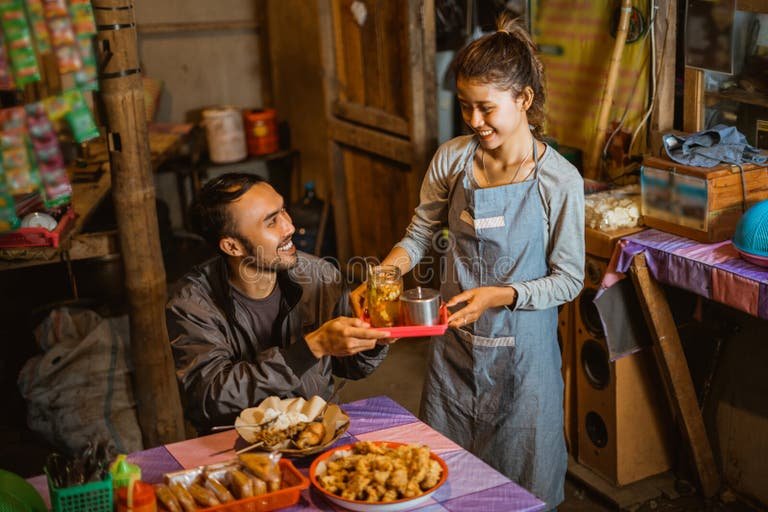
These businesses can be particularly interesting because they can start with a small customer base and grow through referrals.
For example, someone offering mobile car detailing could initially serve customers in one neighborhood rather than trying to build a nationwide business.
The same principle applies to tutoring, cleaning, or technical assistance: start with a specific customer group, demonstrate reliability, and gradually increase your customer base.
Recent South African side-hustle coverage continues to identify local services, reselling, digital services, and skill-based freelancing as viable categories, although actual earnings depend on pricing, costs, demand, and execution.
16. Photography, UGC, and Product Content
Businesses constantly need photographs and short-form videos for websites, advertisements, social media accounts, and online stores.
This creates opportunities for photographers, videographers, and user-generated-content creators.
You do not necessarily need to become a celebrity influencer. A business may simply need someone who can produce a series of natural-looking product demonstrations or short promotional videos.

The opportunity is particularly interesting when content creation is combined with another service.
For example, instead of offering only “video editing,” you could offer:
Product video + editing + captions + social media formatting.
That turns several individual tasks into one clearer business solution.
How to Choose Among the Profitable Side Hustles in 2026
The fact that a side hustle survived does not automatically mean it is right for you.
Start by asking five questions.
1. What skills do you already have?
Someone who understands spreadsheets may have a shorter path into freelance data work than into photography.
Someone who understands social media may be able to offer content-management services without purchasing expensive equipment.
Your existing abilities can reduce your startup costs.
2. Is there an identifiable customer?
Do not begin with the question, “How can I make money?”
Start with:
“Who has a problem that I can solve?”
That changes the entire approach.
A business owner may need someone to manage their inbox. An online retailer may need better product listings. A job seeker may need a professional CV. A creator may need video editing.
Those are identifiable problems.
3. What will you actually keep?
Revenue is not profit.
If you make R5,000 but spend R3,500 on equipment, advertising, transportation, platform fees, and supplies, your financial result is very different from making R5,000 while spending R500.

Always calculate:
Revenue − Expenses = Net Income
This becomes especially important for physical side hustles involving fuel, equipment, stock, or delivery.
4. Can AI make you more productive?
AI should not automatically be viewed as the enemy of every side hustle.
In many cases, it can help an individual compete more effectively.
You can use AI to help with research, brainstorming, first drafts, spreadsheet formulas, administrative tasks, customer-service workflows, and repetitive processes.
At the same time, simple tasks are increasingly exposed to automation. Recent reporting on the gig economy highlights pressure on lower-complexity freelance work, while 2026 freelance research shows stronger opportunities around more complex, AI-augmented services.
The lesson is straightforward: learn to use technology rather than competing against technology at tasks it performs cheaply.
5. Can customers come back?
Recurring customers can make a side hustle considerably easier to manage.
For example:
- A social media manager can have monthly clients.
- A cleaner can have weekly customers.
- A virtual assistant can work on a monthly retainer.
- A website manager can provide ongoing maintenance.
- A tutor can have continuing students.
Recurring revenue does not guarantee stability, but it can reduce the pressure of finding a completely new customer every week.
How to Make an Old Side Hustle Work in 2026
The biggest mistake is assuming that a side hustle must remain exactly as it was several years ago.
The strongest operators adapt.
A freelance writer might add SEO research and content strategy.
A graphic designer might specialize in brand systems and marketing assets instead of basic image generation.
A virtual assistant might add CRM management, automation, and reporting.
A social media manager might offer analytics and content strategy alongside posting.
A reseller might specialize in a specific product category instead of selling random items.

In other words, the side hustle survives by evolving.
Start Small and Test the Market
You do not need to spend thousands before discovering whether customers exist.
Create a simple offer, approach potential customers, list a product or publish useful content, and measure the response.
If people show interest, improve the offer.
If they do not, determine whether the problem is the market, pricing, positioning, or your marketing.
This approach reduces unnecessary financial risk.
Keep Proper Records
If your side hustle starts generating meaningful income, keep records of your revenue and expenses.
South African readers should also remember that income from online activities and side businesses can have tax implications. Guidance published in 2026 emphasizes that online income may need to be declared to SARS depending on the circumstances.
Keep receipts, invoices, platform statements, and expense records rather than trying to reconstruct everything months later.
Final Thoughts
The side hustles that survived 2024–2025 are not necessarily the ones that remained unchanged. Many survived because they solved real problems.
Freelancing survived because businesses still need specialized skills.
Virtual assistance survived because companies still need administrative support.
E-commerce survived because consumers continue to buy products online.
Content creation survived because audiences still consume digital media.
Local services survived because physical problems still require physical solutions.
Digital products survived because people continue to pay for useful information and tools.
The major change in 2026 is the role of technology. AI can make basic work faster and cheaper, but it can also allow a skilled individual to serve more customers and deliver more sophisticated services.
Therefore, when evaluating profitable side hustles in 2026, look beyond hype.
Look for a real problem, a specific customer, manageable costs, repeat demand, and a skill or advantage that gives you a reason to be chosen.
That is what turns an old side hustle into a potentially sustainable income stream.
Related posts:
 Side Hustles That Survived 2024–2025 and Are Still Profitable in 2026
 High-Inflation Side Hustles That Scale With Rising Prices in 2026: 15 Profitable Ideas
 Mobile-First & Africa-Relevant Hustles: Profitable Ways to Earn Using Your Smartphone in 2026
 Weekend Side Hustles That Pay in Local Currency Instantly (2026 Guide)
 WhatsApp Business Side Hustles Exploding in 2026: Ways to Make Money
 Side Hustles That Pay Daily in 2026: Verified Platforms and Fast-Payout Options