
Upskilling Trends in 2026: Courses, Certifications, and Online Learning Platforms
The workplace is changing rapidly, and keeping your existing qualifications up to date is becoming increasingly important. New technologies, artificial intelligence, automation, digital transformation, remote work, and changing employer expectations are influencing the skills businesses need.
As a result, upskilling trends in 2026 are increasingly focused on practical capabilities, technology literacy, professional certifications, short courses, and flexible online education.
Upskilling refers to developing additional skills that can help you perform better in your current career or prepare for new opportunities. Unlike traditional education, upskilling can often happen alongside employment, allowing professionals to learn at their own pace.
For one person, upskilling could mean completing an online course in data analysis. For another, it could involve earning a cybersecurity certification, learning artificial intelligence tools, improving communication skills, or developing practical experience through a portfolio project.
The growth of online learning has also made professional development more accessible. However, having thousands of courses available creates an important question: Which skills and qualifications are actually worth your time and money in 2026?
Why Upskilling Matters in 2026
Technology is changing how many organizations operate. Employees are increasingly expected to work with digital systems, analyze information, collaborate online, and adapt to new tools.
This doesn’t necessarily mean that existing professions are disappearing. Instead, many jobs are incorporating additional technical and digital responsibilities.
For example, an accountant may benefit from data analysis and automation skills. A marketer may need to understand AI-assisted research and analytics. An administrator may benefit from workflow automation and digital collaboration tools.
Therefore, effective upskilling isn’t always about changing careers. It can mean adding complementary skills to your existing professional expertise.
Potential benefits include:
- Improving employability
- Preparing for career advancement
- Qualifying for new positions
- Increasing workplace productivity
- Supporting a career transition
- Building professional confidence
- Strengthening your CV
- Creating new freelance opportunities

1. Artificial Intelligence Skills Are a Major Learning Priority
Artificial intelligence is one of the most prominent influences on professional development in 2026.
AI skills are no longer relevant only to programmers and technology specialists. Professionals in marketing, finance, administration, education, customer service, research, management, and other fields are exploring ways to use AI to improve productivity and workflows.
AI-related learning can include:
- Generative AI fundamentals
- Prompt design
- AI-assisted research
- Data analysis
- Machine learning
- AI automation
- Responsible AI
- AI workflow integration
The appropriate level of training depends on your career goals.
Someone working in marketing may need practical knowledge of AI-assisted content research and campaign analysis. A software developer may require much deeper technical knowledge of machine learning and AI application development.
The key is to learn how AI applies to your particular profession, rather than attempting to learn every new AI tool that appears.

2. Short, Career-Focused Courses
Long academic programs aren’t the only way to acquire useful professional skills.
Short online courses allow learners to focus on specific subjects without committing to years of study.
Popular areas can include:
- Data analysis
- Digital marketing
- Cybersecurity
- Project management
- Coding
- Cloud computing
- Business communication
- Search engine optimization
- Graphic design
- Financial analysis
Short courses can be particularly useful for professionals who already have a qualification but need to add a specific capability.
Before enrolling, examine the curriculum carefully. Look at the instructor’s credentials, course reviews where available, practical assignments, update history, and whether the learning outcomes correspond to the type of work you want to pursue.
A course should have a purpose within your broader career plan.

3. Professional Certifications
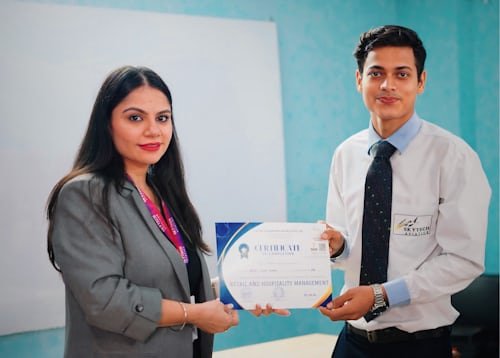
Professional certifications can provide formal evidence that you have studied and demonstrated knowledge in a particular field.
Depending on the industry, certifications can cover areas such as
- Project management
- Cloud computing
- Cybersecurity
- IT support
- Data analytics
- Digital marketing
- Human resources
- Business analysis
However, not every certificate has the same value.
Before paying for a certification, research job advertisements for the positions you want. Identify which credentials employers actually mention or recognize.
A certification can be most useful when it complements your existing education, experience, and practical skills.
4. Micro-Credentials and Digital Badges
Another important development in professional learning is the growth of micro-credentials.
Unlike broad qualifications, micro-credentials generally focus on a specific skill or competency. They can include short professional certificates, digital badges, specialized courses, and assessed learning programs.
This can make them useful for professionals who need to demonstrate a particular capability without completing a lengthy program.
For example, someone working in business could pursue a focused credential in data visualization, while a marketing professional might study analytics or search engine optimization.
However, don’t collect micro-credentials simply because they are easy to obtain.
Ask whether the credential:
- Is relevant to your target career
- Comes from a credible provider
- Includes meaningful assessment
- Contains practical work
- Is recognized by employers
- Demonstrates a clearly defined skill

5. Skills-Based Learning Is Becoming More Important
One of the strongest upskilling trends in 2026 is the movement toward practical, skills-based learning.
Employers need people who can perform tasks, solve problems, use technology, communicate effectively, and produce results.
Consequently, learning should go beyond watching videos or completing quizzes.
For example, if you’re studying data analytics, you could analyze a dataset and create a report. If you’re studying web development, build a functioning website. If you’re learning digital marketing, develop a sample campaign.
These projects can demonstrate that you know how to apply your knowledge.
They can also become valuable portfolio pieces when applying for jobs.

6. Online Learning Platforms Continue to Expand
Online learning platforms provide access to courses covering almost every major professional field.
Some widely known platforms include
- Coursera
- Udemy
- edX
- LinkedIn Learning
Technology companies and professional organizations also offer their own training and certification programs.
The right platform depends on your objective. One platform might be particularly useful for university-backed courses, another for practical software training, while another may specialize in professional development.
Instead of choosing a platform first, identify the skill you need, then compare available courses.

7. Self-Paced Learning Is Becoming More Popular
Flexible learning can be particularly useful for people who already have jobs or other responsibilities.
Self-paced courses allow learners to study when they have available time instead of attending lessons at fixed hours.
This can benefit people who:
- Work full-time
- Run businesses
- Have family responsibilities
- Prefer independent learning
- Live far from educational institutions
- Work irregular hours
However, flexibility also requires discipline.
Without a classroom schedule, learners need to create their own deadlines and allocate regular time for study.
A useful strategy is to establish specific weekly learning sessions rather than relying on finding “free time” that may never appear.

8. Project-Based Learning
Project-based learning allows students to apply new knowledge to realistic situations.
Instead of only completing theoretical exercises, learners may be required to build, analyze, design, research, or solve something.
For example:
Data analysis: Analyze a dataset and explain the findings.
Marketing: Develop a complete campaign strategy.
Programming: Build a functional application.
Project management: Create a project plan and risk register.
Cybersecurity: Complete controlled security exercises.
This approach can make learning more engaging while producing evidence that can potentially be included in a portfolio.

How to Choose the Right Course in 2026
With so many learning options available, choosing the right course can be difficult.
Before enrolling, ask yourself:
Does it support my career objective?
Don’t study something simply because it is trending. Understand how it connects to your desired career.
Is the material current?
This is especially important for technology-related subjects.
Does the course include practical work?
Projects and assignments can help turn knowledge into usable skills.
Is the provider credible?
Research the institution, instructors, qualifications, and reputation.
Do employers recognize the qualification?
A certificate is more useful when it has relevance in the industry you’re targeting.
Is the investment worthwhile?
Consider the total cost and the potential career benefit rather than assuming an expensive course is automatically superior.

Certificates Alone Are Not Enough
One of the biggest mistakes learners can make is collecting certificates without developing practical competence.
A CV containing numerous certificates may look impressive, but employers may still want to know:
What can you actually do with these skills?
For example:
Qualification: Data Analytics Certificate
Evidence: Analyzed a business dataset and developed a performance dashboard.
Qualification: Digital Marketing Certificate
Evidence: Created an SEO-focused campaign and analyzed its performance.
Qualification: Project Management Certificate
Evidence: Developed a project schedule, stakeholder plan, budget, and risk register.
Connecting learning with practical evidence can make your professional profile considerably stronger.

Build an Upskilling Strategy, Not Just a Course List
The best approach to professional development is to create a learning strategy around your career goals.
Start by identifying where you want to be professionally. Then research the skills employers are requesting.
After that, identify your existing strengths and weaknesses.
You can then select courses and certifications that address your most important gaps.
Finally, apply those skills through work, freelance assignments, volunteer projects, or portfolio development.
This approach can prevent you from spending months completing courses that have little connection to your career direction.

9. Microlearning Is Evolving Beyond Short Videos
Microlearning—learning through short, focused lessons—remains useful, particularly for busy professionals. However, the bigger trend in 2026 is moving from isolated bite-sized lessons toward structured learning pathways.
A five-minute video can introduce a concept, but developing genuine competence may require several weeks of study, practice, assessment, and real-world application.
This distinction is important when choosing an online course. A collection of short videos may be convenient, but a structured program with assignments and projects can provide a deeper learning experience.
Some learning experts are therefore placing greater emphasis on multi-week learning journeys rather than treating microlearning as a complete professional-development strategy.

10. Mobile Learning Is Becoming More Practical
Mobile learning allows professionals to study using smartphones and tablets, making education more accessible to people who cannot always sit at a computer.
This can be particularly useful for:
- Language learning
- Professional reading
- Short lessons
- Revision
- Quizzes
- Flashcards
- Video lectures
- Course discussions
Online education is also increasingly viewed as an important way to acquire digital skills because it can provide flexibility and access to courses from universities and industry organizations.
However, mobile learning works best when the course is genuinely designed for smaller screens. Courses requiring extensive programming, data analysis, design work, or other resource-intensive activities may still be easier to complete on a laptop or desktop computer.

11. Employer-Sponsored Upskilling Is Growing
You don’t always have to pay for professional development yourself.
Many organizations are investing in employee training because they need workers who can adapt to technological change.
This is particularly visible in areas such as artificial intelligence, cybersecurity, cloud computing, and other technology-related fields.
A 2026 Pearson study found that 78% of surveyed employers identified professional certification as a leading upskilling investment, while 84% of surveyed employees said they planned to pursue additional certifications during the following 12 months.
If you’re employed, investigate whether your organization provides:
- Training budgets
- Certification reimbursement
- Online learning subscriptions
- Internal workshops
- Mentoring
- Professional development days
- Tuition assistance
Employer-funded training can allow you to develop valuable skills while reducing your personal education costs.

12. AI Certifications and Digital Skills Are Gaining Attention
Artificial intelligence, data, cybersecurity, and cloud computing are among the areas receiving significant attention in professional development.
The OECD’s 2026 research emphasizes the importance of AI literacy, digital skills, critical thinking, and continuous learning as AI changes workplace tasks. It also notes that employer training can support more positive outcomes from AI adoption.
This doesn’t mean everyone needs to become an AI engineer.
Instead, professionals should consider how technology relates to their own occupation.
For example:
Marketing professional: AI-assisted research, analytics, automation, and digital strategy.
Finance professional: Data analytics, automation, financial modelling, and AI literacy.
Administrator: Digital workflows, productivity tools, and process automation.
IT professional: Cloud computing, cybersecurity, and AI systems.
Manager: AI governance, decision-making, and workforce transformation.
The most valuable learning is therefore likely to be the learning that connects technology with an actual business or professional need.

13. Human Skills Remain Essential
Technology skills are important, but professional development in 2026 isn’t exclusively about technology.
Human capabilities such as critical thinking, communication, creativity, leadership, collaboration, adaptability, and problem-solving remain valuable.
Coursera’s 2026 Job Skills Report found substantial growth in critical-thinking learning alongside the rapid increase in generative-AI learning.
This creates an important opportunity for professionals.
Instead of learning AI instead of human skills, learn AI alongside them.
For example, an employee who can use AI to generate information but cannot evaluate its accuracy may still make poor decisions. Similarly, someone with excellent technical skills but weak communication may struggle to explain their work to colleagues or clients.
The combination of technical capability and human judgment can therefore be particularly valuable.

14. Skills-Based Career Planning Is Becoming More Important
Career planning traditionally focuses heavily on job titles.
However, a skills-based approach starts by asking:
What skills does my target career require?
Suppose you want to become a data analyst.
Rather than immediately searching for a generic “data analytics course,” identify the individual capabilities you may need:
- Spreadsheet analysis
- Statistics
- Data visualization
- SQL
- Business intelligence
- Critical thinking
- Communication
You can then assess your current abilities and identify the gaps.
This approach makes it easier to choose courses and certifications because every learning activity has a specific purpose.
It can also make career changes more manageable because skills can transfer between occupations.
15. Online Learning Platforms Are Becoming More Career-Focused
Online learning platforms are increasingly offering more than individual classes.
Learners can find structured programs, professional certificates, specialization pathways, assessments, hands-on projects, and career-focused learning.
For example, Coursera’s 2026 data shows strong growth in generative AI learning, professional certificates, and foundational skills such as critical thinking.
Other established platforms offer different combinations of technical, business, creative, academic, and professional training.
When comparing platforms, consider:
- Course quality
- Instructor expertise
- Practical assignments
- Certification options
- Employer recognition
- Cost
- Learning format
- Support available
- Course update frequency
Don’t choose a platform simply because it has the largest course catalogue.

16. Practical Projects Are Becoming a Career Advantage
A certificate can show that you completed training. A project can show how you applied it.
This makes portfolio development an important part of upskilling.
Consider creating projects such as
Data
Analyze a public dataset and create a dashboard.
Marketing
Develop a complete digital marketing campaign for a hypothetical business.
Programming
Build a website or simple application.
Project Management
Create a project plan, schedule, budget, risk register, and stakeholder matrix.
Cybersecurity
Complete an appropriate controlled cybersecurity laboratory exercise.
Business
Prepare a market analysis and strategic recommendation.
Projects give you something concrete to discuss during interviews and can help demonstrate that your training has practical value.

17. Create a 90-Day Upskilling Plan
You don’t need to learn everything at once.
A focused 90-day plan can make professional development easier to manage.
Days 1–30: Learn
Choose one primary skill and complete foundational training.
Set aside specific study times each week and establish measurable objectives.
For example:
“Complete the introductory data-analysis course and understand spreadsheet formulas, data cleaning, and basic visualization.”
Days 31–60: Practice
Apply the skill through exercises and a practical project.
Don’t simply watch lessons. Try to perform the tasks yourself.
Days 61–90: Demonstrate
Complete your project, update your CV, improve your professional profile, and begin applying your new skills to workplace or freelance opportunities.
This approach transforms learning from an abstract goal into a measurable process.

18. How to Choose Between Courses and Certifications
Courses and certifications aren’t necessarily competing options.
They can serve different purposes.
A course may be appropriate when your primary goal is to learn.
A certification may be appropriate when you also need recognized evidence of your knowledge.
For example, you might take a course to understand cybersecurity fundamentals and later pursue an industry-recognized certification relevant to the jobs you’re targeting.
Before paying for either, examine current job advertisements.
Ask:
- Do employers mention this qualification?
- Is it relevant to my target role?
- Does it teach practical skills?
- Is the provider credible?
- Is the credential current?
- Will it complement my existing experience?
This prevents you from spending money simply to accumulate certificates.

19. Don’t Chase Every New Technology
One of the biggest challenges in 2026 is the speed at which new technologies appear.
There will always be another AI tool, platform, framework, application, or certification claiming to be the next major career opportunity.
Trying to learn everything can result in shallow knowledge and burnout.
Instead, focus on durable capabilities.
For example, AI tools may change, but the ability to
- Analyze information
- Communicate clearly
- Solve problems
- Understand data
- Evaluate AI outputs
- Manage projects
- Learn new software
is likely to remain useful.
Technology-specific knowledge is valuable, but foundational skills can help you adapt when the technology changes.
20. Turn Learning Into Career Opportunities
Completing a course is only one part of the process.
The next step is demonstrating what you’ve learned.
Instead of writing:
“Completed an online digital marketing course.”
You could say:
“Completed digital marketing training and developed a sample SEO campaign incorporating keyword research, content planning, technical recommendations, and performance measurement.”
The second statement provides more context and demonstrates application.
Where appropriate, add relevant projects to your portfolio, discuss them during interviews, and use your new skills in workplace assignments or freelance projects.
The ultimate objective of upskilling is not simply to become a better student.
It is to become more capable and professionally valuable.

Common Upskilling Mistakes to Avoid
1. Collecting Certificates Without Experience
A long list of certificates doesn’t automatically demonstrate competence.
2. Choosing Courses Because They Are Trending
A popular course isn’t necessarily relevant to your career.
3. Ignoring Practical Work
Theory becomes much more valuable when you can apply it.
4. Trying to Learn Everything
Focus on the skills most relevant to your professional objectives.
5. Forgetting Human Skills
Technical abilities should be balanced with communication, critical thinking, collaboration, and adaptability.
6. Never Updating Your Skills
Technology and workplace requirements continue to change, making continuous learning increasingly important. The 2026 ETS Human Progress Report describes skills as something workers increasingly need to refresh, demonstrate, and validate throughout their careers.

The Future of Upskilling in 2026 and Beyond
The direction of professional learning is becoming increasingly clear.
Education is moving toward continuous development rather than a model where someone studies once and relies on the same qualifications throughout an entire career.
AI is accelerating this change. Organizations need employees who can adapt to new technologies, while employees need accessible ways to acquire and demonstrate relevant skills.
The Conference Board reported in July 2026 that many organizations are focusing on AI literacy and upskilling workers in their existing roles, while fewer are adequately preparing employees for the broader reskilling that future workforce changes may require.
This creates an opportunity for proactive professionals.
Instead of waiting for an employer to tell you that your skills are outdated, monitor developments in your industry and identify emerging requirements yourself.

Final Thoughts
The biggest upskilling trends in 2026 point toward a more continuous, practical, and skills-focused approach to career development.
Artificial intelligence, cybersecurity, data analysis, cloud computing, digital literacy, professional certifications, micro-credentials, online courses, and human skills are all important parts of the changing learning landscape.
However, the goal shouldn’t be to collect as many certificates as possible.
The stronger strategy is to identify your career objective, research the skills employers want, find your skill gaps, choose relevant training, and then prove what you can do.
Online learning platforms have made this process more accessible, but the platform itself won’t guarantee employment. A certificate alone doesn’t guarantee a promotion or higher income either.
What matters is the combination of relevant knowledge, practical ability, recognized credentials where appropriate, professional experience, and the ability to adapt.
For job seekers, professionals, freelancers, and entrepreneurs, 2026 is a good time to treat learning as an ongoing career investment.
The most valuable question isn’t simply
“What course should I take?”
Instead, ask:
“What skill would make me more valuable, and what is the most credible way for me to learn and demonstrate it?”
That shift—from collecting courses to developing capabilities—can make upskilling far more strategic and useful in a rapidly changing employment market.
Related posts:
 Upskilling Trends in 2026: Courses, Certifications & Online Learning Platforms
 Employment & Job Market Trends in 2026: Key Workforce Changes and Career Opportunities
 Class Central.com: The Smartest Way to Find Free Online Courses in 2026
 Career Growth & Skills Development: Skills to Build a Successful Career in 2026
 Contract Work vs. Full-Time Roles in 2026: Pros and Cons and What Platforms Still Pay
 Salary Trends in 2026: What Job Seekers Can Expect by Industry