
Niche Consulting Side Hustles You Can Start Without Credentials
Consulting is often associated with expensive qualifications, years of corporate experience, and large professional firms. However, not every consulting service requires a formal degree, license, or industry certification.
There are many areas where clients primarily need practical knowledge, research ability, organization, problem-solving, or specialized experience. This creates opportunities for people to develop small consulting side hustles around skills they already possess.
The key is understanding the difference between providing practical business assistance and presenting yourself as a licensed professional when you are not one.
For example, someone who understands social media could help a small business improve its content strategy. Someone experienced with spreadsheets could help a business organize its reporting system. An experienced online seller could advise beginners on marketplace operations.
These are examples of niche consulting side hustles without credentials where practical ability can be more important than a formal qualification.
However, “without credentials” should never mean “without competence.” You should only advise clients in areas you genuinely understand, be transparent about your experience, and avoid regulated professional services that require specific qualifications or authorization.

What Is Niche Consulting?
Niche consulting involves providing specialized advice or assistance to a clearly defined group of clients.
Instead of marketing yourself as a general consultant, you focus on solving a particular problem for a particular audience.
For example:
General:
“I help businesses improve.”
Niche:
“I help small online retailers organize their product listings and improve their e-commerce workflows.”
The second statement immediately tells potential customers what you do and who you help.
A narrow niche can also make marketing easier because you can create content and services specifically designed around the problems of your target customers.

Can You Really Start Consulting Without Credentials?
Yes, but there is an important qualification: you need to stay within the boundaries of your actual expertise and applicable laws.
Some consulting areas can be entered based on demonstrated experience and practical knowledge.
Others are regulated or can involve significant risks.
For example, you should not present yourself as a qualified lawyer, medical professional, financial adviser, accountant, engineer, or other regulated professional if you don’t have the required qualifications or authorization.
Instead, focus on areas where you can legitimately provide general education, operational support, research, or business assistance.
Your credibility can come from:
- Work experience
- Personal projects
- Freelance experience
- Demonstrated results
- Portfolio examples
- Industry knowledge
- Testimonials
- Case studies

1. Social Media Strategy Consulting
Small businesses often struggle to maintain a consistent social media presence.
If you understand social media platforms and content strategy, you could help businesses develop practical plans.
Your services could include:
- Content calendars
- Platform selection
- Content ideas
- Caption planning
- Audience research
- Competitor research
- Posting schedules
- Basic performance analysis
You don’t necessarily need to manage the client’s account yourself. You could simply provide a strategy that the business owner or their staff implements.
For example, a local restaurant might need a 30-day content plan featuring menu items, behind-the-scenes content, customer experiences, promotions, and educational posts.
Your value comes from making the client’s marketing process more organized and strategic.

2. Resume and Job-Search Consulting
If you have experience with recruitment, administration, career development, or professional writing, you could offer job-search support.
Potential services include:
- Resume reviews
- Resume formatting
- Cover-letter guidance
- LinkedIn profile reviews
- Job-search organization
- Interview preparation
- Application tracking systems
You should avoid guaranteeing that clients will get jobs.
Instead, position the service around improving the quality and presentation of their applications.
You can also develop different packages, such as a basic resume review, a resume-and-LinkedIn package, or a broader job-search organization service.

3. E-Commerce Listing Consulting
Online sellers need accurate and persuasive product listings.
If you understand e-commerce, you could help sellers improve areas such as
- Product titles
- Descriptions
- Search keywords
- Product categorization
- Image requirements
- Listing organization
- Basic competitor research
This can be especially useful for small businesses that have good products but struggle to present them effectively online.
Your service could begin with a listing audit. Review several products, identify weaknesses, and provide practical recommendations.
Don’t promise that changing a listing will automatically produce a specific number of sales. E-commerce performance depends on many factors, including price, demand, competition, product quality, reviews, and platform algorithms.
4. Small-Business Process Consulting
Many small businesses operate with inefficient processes simply because the owner is too busy to redesign them.
If you’re organized and good at identifying inefficiencies, you could help businesses document and improve routine workflows.
Potential areas include:
- Customer inquiries
- Order processing
- File organization
- Appointment scheduling
- Employee onboarding
- Invoice workflows
- Internal communication
- Task management
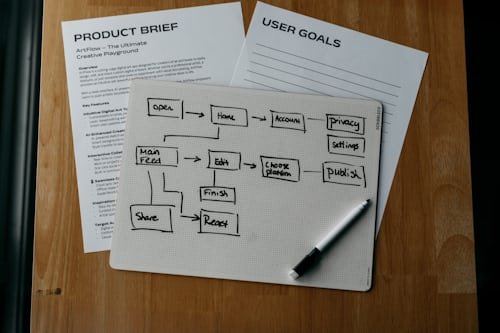
You might begin by mapping the client’s existing process and identifying unnecessary steps.
Then create a simplified workflow or standard operating procedure (SOP).

5. Spreadsheet and Data Organization Consulting
Businesses frequently accumulate information in spreadsheets without having a clear system for organizing it.
If you are comfortable with tools such as Excel or Google Sheets, you could provide practical support.
Services might include:
- Spreadsheet cleanup
- Data organization
- Basic dashboards
- Reporting templates
- Formula assistance
- Data-entry workflows
- Tracking systems
For example, a small retailer might need a simple spreadsheet for monitoring inventory, orders, expenses, and sales.
You don’t have to position yourself as a data scientist. Instead, focus on practical data organization and reporting services that match your capabilities.

6. Productivity Consulting
Many professionals struggle with managing tasks, information, meetings, and competing priorities.
If you have developed an effective productivity system, you could help individuals or small teams organize their workflows.
Potential services include:
- Task-management setup
- Calendar organization
- Digital file organization
- Workflow reviews
- Meeting organization
- Time-management systems
- Productivity tool setup
For example, you could help a freelancer establish a system for tracking leads, projects, deadlines, invoices, and follow-ups.
The objective isn’t to promise that a client will become dramatically more productive. Instead, help them create a system that is easier to maintain.

7. Local Business Digital Presence Consulting
Many small local businesses have limited online visibility.
You could help businesses review their digital presence and identify areas for improvement.
Your service might cover:
- Website usability
- Business listings
- Social media profiles
- Contact information
- Online reviews
- Basic local SEO
- Mobile friendliness
- Online customer communication
For example, a local cleaning company might have an outdated website, inconsistent contact information, and no clear service descriptions.
You could create an audit showing what should be improved.
Be careful not to guarantee specific search engine rankings because search results are influenced by numerous factors outside your control.

8. Customer-Service Consulting
Businesses can lose customers because of slow responses, inconsistent communication, or poorly organized support processes.
If you have customer service experience, you could help small businesses improve their communication systems.
Services could include:
- FAQ development
- Customer-response templates
- Complaint-handling workflows
- Communication guidelines
- Customer-feedback systems
- Response-time processes
For instance, you could create a library of professional responses to common customer questions while helping the business establish an escalation process for complex complaints.

9. Research Consulting
Research is another potentially accessible consulting niche.
Businesses may need help researching:
- Competitors
- Products
- Markets
- Customers
- Industry trends
- Potential suppliers
- Content topics
- Business opportunities
A research consultant doesn’t necessarily need an advanced academic qualification for basic commercial research, provided they accurately represent their expertise.
Your deliverable could be a structured report containing sources, findings, comparisons, and practical observations.
Always distinguish between facts, sourced information, and your interpretation.

10. Content Strategy Consulting
Businesses often know they need content but don’t know what to publish.
A content strategy consultant can help them identify topics that are relevant to their customers.
Potential services include:
- Blog topic planning
- Content calendars
- Audience research
- Keyword research
- Content audits
- Social media themes
- Newsletter planning
You don’t necessarily need to write every article yourself.
Your role can be to create a strategic roadmap that helps the business produce more relevant content consistently.

What You Need Before Finding Clients
You don’t need an expensive office to start a consulting side hustle.
A basic setup can include:
- A professional email address
- A clear service description
- A simple portfolio
- A pricing structure
- A method for communicating with clients
- A basic contract or written agreement
- An invoicing process
- Examples of your work
Start by creating two or three sample projects if you don’t have previous consulting clients.
For example, if you want to offer social media consulting, create a hypothetical audit of a small business and demonstrate how you would improve its content strategy.
This gives prospective customers something concrete to evaluate.

11. AI Productivity Consulting
Artificial intelligence has created another potential consulting niche.
Many individuals and small businesses know that AI tools can save time but do not know how to incorporate them into their everyday workflows.
You could help clients identify repetitive tasks that could potentially be assisted by AI, create better prompts, organize AI-assisted workflows, or identify appropriate tools for specific tasks.
For example, you might help a small business create an AI-assisted process for:
- Drafting customer-service responses
- Brainstorming social media content
- Summarizing meetings
- Organizing research
- Creating content outlines
- Preparing internal documents
- Generating first drafts of routine communications
Your role should focus on productivity and implementation rather than making unsupported promises about what AI can accomplish.
You should also avoid handling confidential client information in third-party AI systems unless the client has explicitly approved the process and appropriate privacy protections are in place.

12. Website and SEO Audit Consulting
You do not necessarily need to be a professional web developer to identify obvious problems with a website.
A website audit service can focus on practical issues such as
- Poor page titles
- Missing or weak meta descriptions
- Difficult navigation
- Broken links
- Poorly structured content
- Missing calls to action
- Slow or confusing user experiences
- Inconsistent branding
- Basic on-page SEO problems
You could provide the client with a written audit explaining what you found and what they could improve.
Importantly, avoid guaranteeing specific Google rankings. Search-engine performance depends on many factors, and no legitimate consultant can guarantee a particular ranking.

13. Personal Branding Consulting
Professionals increasingly need to communicate their expertise online.
This creates an opportunity for a personal branding consultant who can help individuals improve the way they present themselves on platforms such as LinkedIn and professional websites.
Your service could include:
- Profile reviews
- LinkedIn headline improvements
- About-section recommendations
- Content ideas
- Personal positioning
- Portfolio organization
- Professional biography writing
- Content calendars
You could specialize in a particular audience, such as graduates, freelancers, entrepreneurs, job seekers, or small-business owners.
The more specific your target market becomes, the easier it can be to explain what your consulting service actually does.

14. E-Commerce Operations Consulting
Selling products online involves much more than uploading a product and waiting for customers.
Small online sellers often struggle with organizing product information, managing inventory, improving listings, and creating efficient administrative processes.
An e-commerce operations consultant could help sellers with tasks such as
- Product catalog organization
- Inventory spreadsheets
- Listing audits
- Product-description improvements
- Order-management processes
- Customer-service workflows
- Basic marketplace research
- Competitor research
- Returns and administrative procedures
You could specialize in a particular marketplace or type of seller.
For example, rather than advertising yourself as an “e-commerce consultant,” you could position yourself as someone who helps small online retailers organize their product listings and operations.

15. Digital Organization Consulting
Digital clutter can become a surprisingly frustrating problem.
Businesses and individuals can accumulate thousands of emails, documents, photographs, spreadsheets, and digital files without having an effective organization system.
A digital organization consultant can help clients create practical systems for managing information.
Services could include:
- Folder structures
- File naming systems
- Document organization
- Email organization
- Cloud-storage organization
- Spreadsheet cleanup
- Digital-workflow recommendations
This type of service is particularly suitable for people who are naturally organized and enjoy creating efficient systems.
You are not simply “organizing files.” You are helping clients spend less time searching for information.

16. Travel Planning Consulting
Travel planning can also become a niche service if you are good at research and organization.
You could create customized travel research packages that help clients compare destinations, accommodation areas, transportation options, attractions, and activities.
For example, a client might pay you to create a detailed itinerary containing:
- Suggested destinations
- Daily activities
- Transportation information
- Estimated costs
- Restaurant suggestions
- Attractions
- Practical travel considerations
Be clear about the limits of your service. If your work involves regulated travel agent activities, bookings, insurance, or other services requiring authorization in a particular jurisdiction, comply with the applicable rules.
How to Price Your Consulting Service
One of the biggest challenges for a new consultant is deciding what to charge.
A common mistake is simply choosing a very low hourly rate because you are new.
Instead, consider pricing around the value and scope of the deliverable.
For example, rather than saying:
“I charge R150 per hour for consulting.”
You could offer a clearly defined package such as
Website Starter Audit
- Review up to five pages
- Identify basic SEO problems
- Identify usability issues
- Provide recommendations
- Deliver a written report
The client knows exactly what they are purchasing.
You can offer different packages, such as
- Basic audit
- Standard consulting package
- Premium consulting package
As your experience and demand increase, you can gradually adjust your pricing.

Start With Small, Clearly Defined Projects
When you are new, avoid accepting huge projects that you cannot confidently complete.
A small project gives you an opportunity to:
- Test your process
- Build experience
- Collect feedback
- Improve your service
- Develop a portfolio
- Understand client expectations
For example, your first consulting product might be a one-hour consultation combined with a short written action plan.
Once you understand what clients repeatedly request, you can turn that service into a standardized package.
How to Find Your First Consulting Clients
You do not need thousands of followers to get your first client.
Start with people and businesses that have an obvious connection to your niche.
Potential sources include:
- Freelance marketplaces
- Local businesses
- Professional networks
- Business communities
- Online groups
- Personal contacts
- Existing professional relationships
You can also create useful public content demonstrating your knowledge.
For example, if you provide website audits, publish educational posts explaining common website mistakes.
If you specialize in e-commerce listings, publish examples showing how poorly structured product information can be improved.
The objective is to demonstrate competence before asking someone to pay you.

Offer a Specific Outcome
Compare these two statements:
“I provide business consulting.”
with:
“I help small online stores organize their product listings, inventory information, and customer-service workflows.”
The second statement is much easier for a potential client to understand.
A strong consulting offer should answer three questions:
Who do you help?
What problem do you solve?
What result or deliverable do you provide?
How to Build Credibility Without Formal Credentials
Not having a formal consulting qualification does not mean you cannot demonstrate competence.
You can build credibility through practical evidence.
Create sample projects that demonstrate your ability.
For example:
- Conduct a mock website audit
- Create a sample e-commerce listing
- Build a spreadsheet dashboard
- Create a social media content strategy
- Prepare a sample research report
- Develop a productivity workflow
These examples can become part of a simple online portfolio.
You can also collect testimonials from legitimate clients once you have completed projects.
However, never fabricate clients, results, qualifications, or testimonials.
Your credibility should come from evidence of what you can actually do.

Important Boundaries When Consulting Without Credentials
The phrase “without credentials” needs an important qualification.
You should never represent yourself as a licensed or regulated professional when you are not one.
Depending on your location and the specific service, certain areas may require professional qualifications, registration, or authorization.
Be especially careful with services involving:
- Legal advice
- Medical advice
- Regulated financial advice
- Tax advice
- Engineering
- Architecture
- Licensed professional services
Instead, concentrate on areas where you can legitimately provide research, administrative assistance, education, organization, digital support, or general business assistance.
The goal is not to bypass professional requirements.
The goal is to turn genuine skills into a useful service without unnecessarily assuming that every consulting service requires an expensive consulting qualification.
Mistakes to Avoid
Several mistakes can make a new consulting business much harder to operate.
1. Being Too General
Trying to help “everyone with everything” makes your service difficult to market.
Choose a problem and audience.
2. Overpromising Results
Never guarantee outcomes you cannot control.
For example, promising that your SEO service will guarantee Google’s first position is unrealistic.
3. Charging Without Defining Scope
Always explain what the client receives.
Include the number of meetings, revisions, pages, products, or hours where appropriate.
4. Ignoring Client Confidentiality
You may encounter private business information during consulting projects.
Treat client information responsibly and use appropriate security practices.
5. Pretending to Have Qualifications
Never invent certificates, degrees, clients, or professional experience.
Long-term consulting businesses depend heavily on trust.
6. Doing Everything Manually
Once you have completed several projects, identify repetitive tasks that can be standardized.
Templates, checklists, and documented workflows can help you deliver services more efficiently.
Turning a Small Consulting Side Hustle Into a Business
A consulting side hustle does not have to remain a collection of random freelance jobs.
You can gradually turn it into a structured business.
Start with one service.
Then identify what clients repeatedly ask for.
Turn those recurring requests into packages.
For example:
Stage 1: One-off consulting sessions
Stage 2: Fixed-price consulting packages
Stage 3: Monthly consulting retainers
Stage 4: Templates and digital products
Stage 5: Training or workshops
Stage 6: A small consulting agency or specialized team
This creates multiple potential revenue streams without requiring you to personally complete every task forever.

Final Thoughts
The best niche consulting side hustles without credentials are not based on pretending to know everything.
They are based on identifying a specific problem, developing practical expertise, and helping someone solve that problem.
You could begin with something as simple as organizing spreadsheets, improving online listings, researching competitors, creating content strategies, or helping a small business establish better digital processes.
Your lack of formal consulting credentials may mean you need to work harder to demonstrate credibility, but it does not automatically prevent you from building a legitimate service.
Start small. Choose a clearly defined niche. Build examples of your work. Set realistic expectations. Protect client information. Stay within your actual competence and any professional or legal requirements that apply.
Most importantly, focus on solving a real problem for a specific type of customer.
That is the foundation upon which many successful consulting businesses are built.
Related posts:
 Top Side Hustles to Start Before 2026: Your Guide to Extra Income and Financial Freedom
 Hidden Side Hustles for 2026: Unique Ways to Earn More
 Subscription Side Businesses: Using Niche Communities to Create Monthly Revenue Streams
 33 AI Side Hustles That Still Work in 2026 (Even After Saturation)
 High-Inflation Side Hustles That Scale With Rising Prices in 2026: 15 Profitable Ideas
 Mobile Phone-Only Side Hustles That Work in 2026 (No Laptop Needed)