
Artificial intelligence has become one of the most disruptive technologies in the global workforce, and freelancers are experiencing its effects more quickly than many traditional employees. In 2026, businesses are increasingly turning to AI-powered tools to complete tasks that once required human expertise, from writing and graphic design to coding and customer support.
While this shift has created concern among freelancers, it has also opened new opportunities for those willing to adapt. The future of freelancing isn’t about competing against AI—it’s about learning how to work alongside it.
In this guide, we’ll explore how AI is reshaping freelance work, which jobs are most affected, and how independent professionals can remain valuable in an AI-driven economy.
Why Businesses Are Choosing AI

Businesses are embracing AI because it offers several advantages over traditional workflows.
Key benefits include the following:
- Faster task completion
- Lower operating costs
- 24/7 productivity
- Consistent output
- Easy scalability
- Improved data analysis
- Workflow automation
For startups and small businesses with limited budgets, AI can handle repetitive tasks that previously required hiring freelancers.
However, AI still has limitations, especially when creativity, emotional intelligence, and strategic decision-making are required.
Freelance Jobs Most Affected by AI
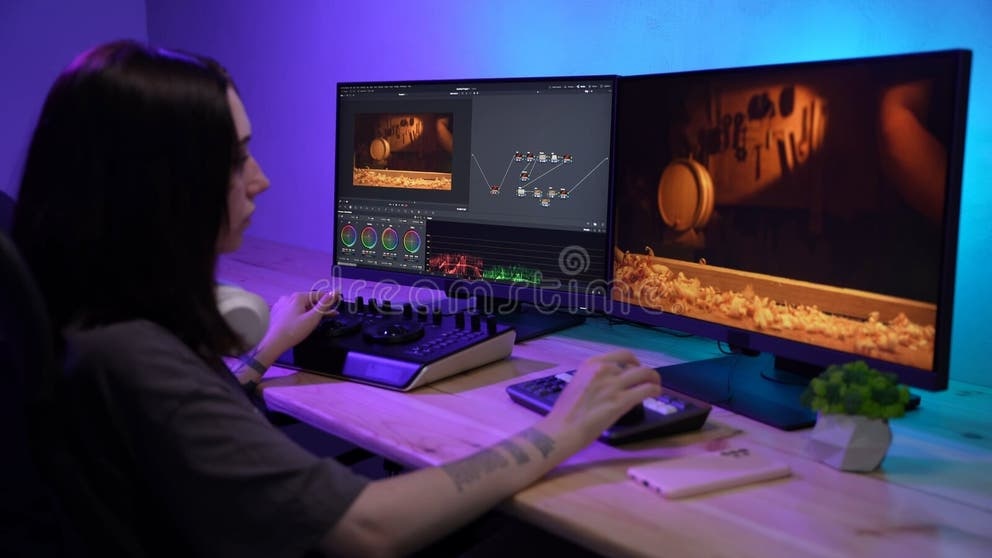
Not every freelance profession faces the same level of disruption. Jobs involving repetitive or formulaic tasks are experiencing the biggest changes.
1. Content Writing
AI writing assistants can now generate the following:
- Blog articles
- Product descriptions
- Email campaigns
- Social media captions
- Marketing copy
As a result, businesses are outsourcing fewer basic writing tasks.
However, experienced writers who specialize in storytelling, technical writing, journalism, or SEO strategy remain in high demand.
2. Graphic Design
AI-powered image generators allow businesses to create illustrations, logos, marketing graphics, and concept art within minutes.
Routine design work has become more automated, but designers who focus on branding, user experience (UX), and creative direction continue to offer significant value.
3. Video Editing
AI can now:
- Remove background noise
- Generate subtitles
- Edit short-form videos
- Detect highlights
- Create transitions
- Resize videos for social platforms
These capabilities reduce the time required for basic editing tasks.
Professional editors remain essential for storytelling, cinematic production, and brand consistency.
4. Translation Services
Machine translation has improved dramatically.
AI tools now provide fast translations across dozens of languages, reducing demand for simple translation projects.
Human translators still play an important role in the following:
- Legal documents
- Medical content
- Marketing campaigns
- Literature
- Cultural localization
Accuracy and cultural understanding remain difficult for AI to replicate completely.
5. Customer Support
Many businesses now rely on AI chatbots to answer common customer questions.
These systems handle:
- Order tracking
- FAQs
- Appointment scheduling
- Account management
- Product recommendations
Human support agents continue to manage complex cases requiring empathy, negotiation, or critical thinking.
Freelance Jobs Growing Because of AI
Although AI is replacing certain tasks, it’s also creating entirely new freelance careers.
Growing opportunities include:
- AI prompt engineering
- AI workflow automation
- AI consulting
- Content editing
- AI quality assurance
- Automation implementation
- Data annotation
- AI training services
Rather than eliminating freelancers, AI is changing the skills clients are willing to pay for.
Why Human Skills Still Matter
Artificial intelligence excels at speed and automation, but it struggles with qualities that define exceptional freelance work.
Clients continue to value professionals who bring the following:
Creativity
Developing unique ideas, original campaigns, and compelling narratives remains largely human-driven.
Strategic Thinking
Businesses need freelancers who understand objectives—not just those who produce content.
Emotional Intelligence
Negotiating with clients, understanding customer emotions, and building trust remain essential skills.
Industry Expertise
Freelancers with deep knowledge in law, healthcare, finance, engineering, or education continue to command premium rates because they combine subject-matter expertise with AI tools.
The Rise of the AI-Augmented Freelancer
The most successful freelancers in 2026 are not resisting AI—they are embracing it.
Instead of spending hours on repetitive work, they use AI to:
- Generate first drafts
- Brainstorm ideas
- Organize research
- Create outlines
- Improve productivity
- Analyze market trends
This allows them to spend more time on creative thinking, client relationships, and business growth.
Freelancers who learn to integrate AI into their workflows often complete projects faster while maintaining high quality, giving them a competitive advantage over those who rely solely on manual processes.
Skills That Are Becoming More Valuable
While AI is automating repetitive tasks, it is also increasing demand for freelancers with higher-level skills that require critical thinking, creativity, and human interaction.
AI Strategy and Consulting
Businesses may have access to AI tools, but many don’t know how to use them effectively. Freelancers who can recommend the right tools, develop AI workflows, and train teams are becoming highly sought after.
Services include:
- AI implementation planning
- Workflow optimization
- AI tool selection
- Employee training
- Business process automation
Prompt Engineering
Although AI models are becoming easier to use, creating prompts that consistently generate high-quality results remains a valuable skill.
Prompt engineers help businesses
- Produce better content
- Generate marketing campaigns
- Improve AI accuracy
- Automate repetitive tasks
- Increase productivity
Many freelancers now sell prompt libraries, custom prompt templates, and AI consulting packages.
Content Editing and Quality Assurance
AI can generate content quickly, but it still requires human oversight.
Businesses increasingly hire freelancers to:
- Fact-check AI-generated content
- Improve readability
- Ensure brand consistency
- Optimize for SEO
- Verify sources
- Remove inaccuracies
Editors who understand both AI and content strategy are becoming indispensable.
Creative Direction
Clients still need professionals who can transform ideas into compelling campaigns.
Creative directors guide:
- Branding
- Advertising concepts
- Marketing strategy
- Visual storytelling
- Product launches
AI can produce assets, but humans determine the overall vision and strategy.
Best AI Tools Every Freelancer Should Learn
To stay competitive in 2026, freelancers should become familiar with leading AI-powered tools that enhance productivity rather than replace expertise.
Popular categories include:
Writing and Research
- AI writing assistants
- Grammar and editing tools
- Research assistants
Design
- AI image generators
- Graphic editing software
- Presentation design tools
Video Production
- Automatic subtitle generators
- AI video editors
- Voice enhancement software
Productivity
- Workflow automation platforms
- AI scheduling assistants
- Project management software
Mastering these tools allows freelancers to complete projects faster while maintaining professional quality.
How to Future-Proof Your Freelance Career
The freelance economy will continue evolving, but professionals who adapt will remain in demand.
Here are practical ways to future-proof your career:
Specialize in a Niche
Generalists face greater competition. Specialists with expertise in industries such as healthcare, finance, cybersecurity, education, or legal services often command higher rates.
Build a Personal Brand
Clients increasingly hire people they trust.
Develop your reputation by:
- Publishing helpful content
- Speaking at industry events
- Sharing case studies
- Maintaining a professional website
- Growing your LinkedIn presence
A strong personal brand makes you less dependent on freelance marketplaces.
Offer Complete Solutions
Instead of selling individual tasks, package your services around outcomes.
For example:
Instead of offering:
- Blog writing
Offer:
- SEO strategy
- Keyword research
- Content creation
- Performance reporting
Clients value comprehensive solutions over isolated services.
Continue Learning
Invest regularly in:
- Online certifications
- AI training
- Industry conferences
- Technical skills
- Communication skills
Continuous learning remains one of the strongest competitive advantages.
Common Mistakes Freelancers Should Avoid

Many freelancers unintentionally reduce their value by making these mistakes:
Ignoring AI Completely
Refusing to learn AI tools may leave you at a disadvantage compared to competitors who deliver work faster and more efficiently.
Depending on One Skill
Diversifying your expertise helps protect your income as industries evolve.
Competing Only on Price
Lowering prices rarely creates sustainable success. Instead, focus on delivering measurable value.
Failing to Upskill
Clients increasingly expect freelancers to understand AI-assisted workflows and modern digital tools.
The Future of Freelancing Beyond 2026

The freelance industry is unlikely to disappear. Instead, it is undergoing a transformation.
Experts predict that freelancers will increasingly serve as:
- AI consultants
- Creative strategists
- Automation specialists
- Technical advisors
- Digital educators
- Workflow designers
Rather than replacing professionals entirely, AI is eliminating repetitive tasks while increasing demand for higher-value expertise.
Freelancers who embrace technology while strengthening uniquely human skills—such as creativity, leadership, empathy, and strategic thinking—will continue to thrive.
Conclusion
Artificial intelligence is undoubtedly reshaping the freelance economy in 2026, but it is not signaling the end of freelancing. Instead, it is redefining what clients value most. Routine tasks are becoming automated, while creativity, strategic thinking, technical expertise, and meaningful client relationships are becoming even more important.
Freelancers who adapt by embracing AI as a productivity tool rather than viewing it as a competitor will be better positioned to succeed. By specializing in profitable niches, building a strong personal brand, continuously learning new technologies, and offering comprehensive solutions, independent professionals can continue to grow thriving businesses in the AI era.
The future belongs to freelancers who combine the speed and efficiency of artificial intelligence with the originality, empathy, and insight that only humans can provide.
Related posts:
 Hidden Side Hustles for 2026: Unique Ways to Earn More
 Short-Term Contracts and Gig Jobs Rising in 2026: What Every Job Seeker Should Know
 Job Search in a Tough Economy: How to Get Hired Faster in 2026
 Contract Work vs. Full-Time Roles in 2026: Pros and Cons and What Platforms Still Pay
 Remote vs On-Site Jobs in 2026: What Employers Are Offering Today
 Short-Term Contracts and Gig Jobs Rising in 2026: What Job Seekers Need to Know